
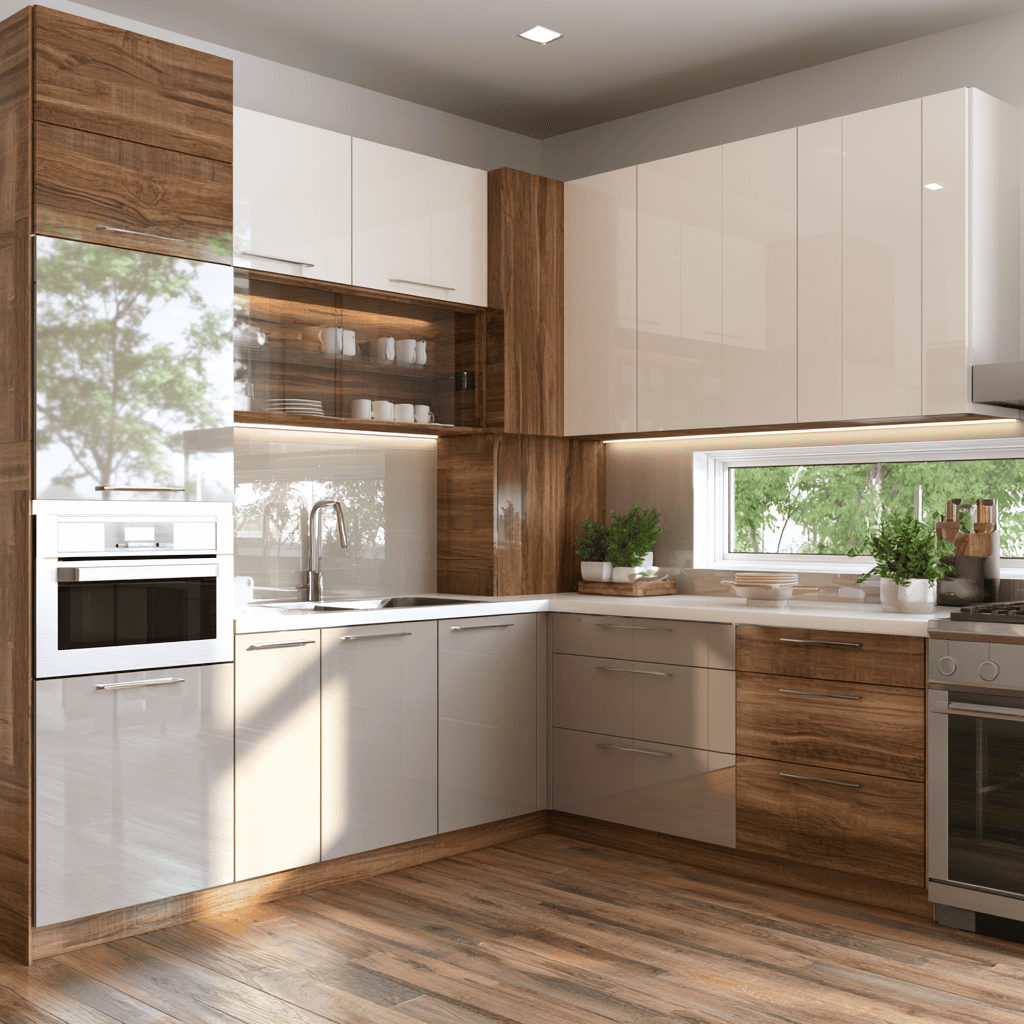
There is a particular kind of magic that happens when you walk into a kitchen and everything simply feels right. The space has a natural rhythm, a sense of harmony that makes you want to linger a little longer and enjoy the surroundings. Achieving this effortless beauty is not about filling every wall with cabinets or chasing an impossible ideal of perfection—it is about understanding how to create visual balance. With just four thoughtfully selected cabinet types, you can design a kitchen that feels grounded, spacious, and beautifully composed. When you explore the exceptional best cabinets Kentucky has to offer, you will find an inspiring range of options that make achieving this aesthetic harmony an absolute pleasure. The journey to a balanced, beautiful kitchen starts with understanding a few simple design principles that will transform your space.
Understanding Visual Balance: The Foundation Of Beautiful Design
 Visual balance is the principle that makes a design feel equally weighted throughout the composition. It is what our eyes instinctively look for when we enter a room, and it is the reason some spaces feel calming while others feel slightly off. In kitchen design, balance goes far beyond simple symmetry—it is about creating a sense of harmony where no single element overwhelms the others. The wonderful news is that achieving this balance is entirely within your reach with just a few strategic cabinet choices.
When we talk about visual balance in the context of your kitchen, we are considering how the visual weight of different elements interacts. A large, tall cabinet carries significant visual weight, as does a bank of dark-colored cabinets on one wall. The goal is to distribute this weight evenly throughout the space so that no area feels heavier than another. This is where the selection of your four key cabinet types becomes so important. By choosing cabinets with different visual weights and placing them thoughtfully, you can create a space that feels effortlessly composed.
The Role Of Symmetry And The Power Of Asymmetry
Many homeowners instinctively gravitate toward symmetry when thinking about balance, and for good reason. Symmetry creates a sense of order and stability that our brains find deeply satisfying. A perfectly symmetrical kitchen, where cabinets on one side mirror those on the other, feels polished and timeless. It is a classic approach that works beautifully in open-concept homes where the kitchen is visible from multiple angles.
However, the wisdom of experienced designers reveals that true beauty often lies in a more nuanced approach. Symmetrical kitchens can sometimes struggle to accommodate all the practical requirements of a functional cooking space. You may find yourself sacrificing storage or workflow just to achieve a perfectly matched look. This is where asymmetry becomes your friend—not as a compromise, but as an intentional design choice that brings energy and interest to your space.
Asymmetry tends to read as more dynamic and interesting, allowing for greater flexibility in meeting both practical and aesthetic needs. The key is to aim for what designers call “visual balance” rather than “perfect symmetry.” Your kitchen does not need to be identical on both sides; it simply needs to feel harmonious when you look at it as a whole. This is the secret behind some of the most stunning kitchens you have ever seen—they are balanced without being rigidly symmetrical.
The Four Cabinet Types For Visual Harmony
The Tall Cabinet: Your Visual Anchor
Every balanced design needs an anchor, and in your kitchen, the tall cabinet serves this role beautifully. Whether it is a floor-to-ceiling pantry, a refrigerator surround, or a tall storage unit, this cabinet provides vertical mass that grounds your design. When positioned thoughtfully, a tall cabinet creates a visual endpoint that helps organize the entire kitchen layout.
Placing your tall cabinet at one end of a cabinet run creates a natural stopping point that prevents the eye from wandering endlessly. This anchoring effect is particularly wonderful in longer kitchens where banks of cabinets might otherwise feel monotonous. Design professionals often use tall cabinets to balance the visual weight of a range hood or a large window on the opposite side of the room. This dynamic approach to balance keeps your kitchen feeling alive and interesting rather than static.
The Base Cabinet Run: Creating Your Rhythm
Base cabinets form the visual foundation of your kitchen, and how you arrange them determines the rhythm of your space. Repeating similar cabinet widths along a wall creates a sense of order that is inherently pleasing. However, breaking this rhythm intentionally can also be effective—for instance, placing a bank of drawers between two door cabinets adds visual variety without sacrificing balance.
The key to working with base cabinets is to consider their visual weight as a continuous line rather than individual units. If you have a long stretch of lower cabinets on one wall, balancing this with a similarly weighted arrangement on the opposite wall helps distribute visual mass evenly. It is not about making every cabinet identical but about ensuring the overall feeling is one of equilibrium.
The Wall Cabinet: Adding Vertical Interest
Wall cabinets are where your kitchen’s personality truly shines, and they offer wonderful opportunities to create visual balance. These upper units frame your workspace, drawing the eye upward and making your kitchen feel taller and more expansive. The arrangement of wall cabinets relative to each other and to your base cabinets contributes significantly to your kitchen’s overall harmony.
Designers often recommend varying the treatment of wall cabinets to prevent monotony. You might have solid cabinets on one section of wall and glass-front cabinets on another, creating a pleasing contrast that adds depth. Hanging two identical pendants above an island or balancing cabinets on either side of a hood are simple ways to introduce symmetry where it matters most. The goal is to keep the upper part of your kitchen feeling light and open while still providing the storage you need.
The Focal Point Cabinet: Your Statement Piece
Every beautiful kitchen benefits from a feature that immediately draws the eye—a focal point that sets the tone for the entire space. This might be a striking range hood surround, a beautiful cabinet with glass doors, or a custom unit in a contrasting finish that commands attention. Without a focal point, kitchens can feel visually scattered; with one, the design feels grounded and memorable.
Your focal point cabinet is where you can have a little fun with the 70/30 design rule—where 70% of your kitchen uses calm, cohesive finishes, and 30% introduces character and personality. This could be a breakfast cupboard in a different finish, a pantry cabinet in a richer timber, or a beautiful piece of stone that contrasts with your main cabinetry. The trick is making sure your 30% earns its place by connecting back to the rest of the kitchen through undertone, texture, or architectural detail.
Practical Tips For Achieving Balance
Start your layout from the center of your space and work outward. This approach helps ensure that your focal point is properly positioned and that the cabinets on either side feel well-proportioned. If a window or structural element prevents perfect symmetry, do not stress—balance is far more important than exact matching.
Consider the visual weight of finishes and colors. Dark cabinets carry more visual weight than light ones, so if you have dark cabinets on one wall, balance them with a substantial feature elsewhere. This might be a large window, a striking backsplash, or a statement island that provides equal visual presence.
Finally, remember that balance is about harmony, not perfection. A few inches of difference in cabinet widths will not be noticeable in your actual kitchen. What matters is that when you step back and look at your space, it feels composed, calm, and complete.
Your Beautifully Balanced Kitchen Awaits
Designing with four key cabinet types gives you everything you need to create a kitchen that feels visually balanced, welcoming, and utterly beautiful. Whether you embrace the timeless appeal of symmetry or the dynamic energy of asymmetry, your thoughtful selections will result in a space that feels harmonious and complete.
Your kitchen deserves to be a place where every glance brings a smile—where the proportions feel right, the finishes sing together, and the overall impression is one of effortless beauty. With the right four cabinets and a solid understanding of visual balance, your kitchen will become exactly that: a space that works beautifully, looks stunning, and brings you joy every single day.