

For years, a quiet frustration has simmered in workplaces across every industry: the gap between the work people were hired to do and the work they actually spend their time on. Skilled professionals—analysts, managers, engineers, and leaders—find themselves buried under an avalanche of tedious data tasks. Updating spreadsheets, reconciling reports, manually tagging records, and hunting for information across disparate systems consume hours that should be dedicated to strategic thinking, creative problem-solving, and meaningful human connection. This is not just an inefficiency; it is a drain on human potential. But a profound shift is underway. The emergence of the AI Data Agent is transforming this dynamic, not by replacing human workers, but by liberating them. These intelligent digital teammates are taking on the burden of repetitive data work, freeing people to focus on what they do best: bringing judgment, creativity, and empathy to their roles. As 2026 unfolds, this empowerment is becoming one of the most exciting developments in the modern workplace.
The Liberation From Repetition
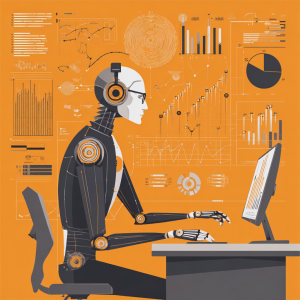 The most immediate and welcome impact of an AI Data Agent is the sheer volume of tedious work it can absorb. Consider the experience of analytics engineers who once spent entire afternoons on tasks that required no real thinking—updating column definitions, copy-pasting documentation, or manually tracing data lineage through multiple files. What once took three hours of mind-numbing work now happens in under two minutes with the assistance of an AI coding agent .
This liberation extends far beyond technical roles. In healthcare, front-line leaders at institutions like Mass General Brigham are using AI agents to eliminate hours of administrative workload. Instead of navigating complex dashboards and manually reconciling data to answer routine questions about staffing and vendor performance, they can now ask simple questions—”How many shifts are unfilled for tomorrow?”—and receive immediate, context-aware responses . The technology frees these leaders to focus on patient care and team development rather than wrestling with data.
Samsung SDS demonstrated this transformation vividly at CES 2026, showcasing how AI agents could reshape a government ministry officer’s workday. By handling tasks like harmful video analysis and report generation, the agents reduced daily working hours by an estimated 67%—approximately five hours and twenty minutes saved each day . That is not time lost; it is time returned to human beings for higher-value pursuits.
From Data Gatekeepers To Strategic Enablers
Perhaps no role is being more profoundly transformed than that of the data professional itself. The traditional image of the analyst—spending hours writing mundane SQL queries and waiting for requests to trickle in—is rapidly becoming obsolete. Sridhar Ramaswamy, CEO of Snowflake, predicts that by 2026, the highest-value work for analysts will shift entirely to defining data semantics: setting the definitions and context that allow AI agents to serve the rest of the organization around the clock .
This evolution turns the analyst from a bottleneck into an enabler. At TS Imagine, an asset manager, the CIO noted that instead of three people working 9-to-5, the organization now has an intelligence system available 24/7. Analysts can focus on higher-value, open-ended analysis they would never have had time to do before . They are no longer query writers; they are semantic architects, building the infrastructure that allows non-technical employees to answer complex questions without learning code.
Real-Time Intelligence, Not Just Reports
The empowerment AI Data Agents provide is not just about doing things faster; it is about accessing insights that were previously impossible to obtain. At Sigma Computing, analytics engineers are using AI to turn customer support transcripts into product gold. By feeding thousands of support conversations into an LLM and asking structured questions—”Was this a bug report, a feature request, or just an FAQ?”—they can surface trends, flag recurring issues, and close the loop between support, product, and customer success .
One transcript becomes an insight. A thousand become a roadmap. This is work that no human could do manually, but with an AI partner, it becomes not just possible but routine. The human analytics engineer brings the business context—understanding what to look for, how to ask the right questions, and how to turn data into action. The AI agent handles the scale.
Autonomous Workflows, Augmented Humans
The most advanced AI Data Agents are moving beyond simple task assistance to autonomous workflow execution. ADP’s recently launched ADP Assist agents exemplify this shift. These persona-based agents are tailored for employees, managers, HR practitioners, and payroll professionals, each designed to solve specific workforce challenges .
For payroll practitioners, an agent automatically audits for variances, suggesting and facilitating remediations under human oversight. For HR leaders, an analytics agent can create, execute, and analyze custom reports based on simple search queries through chat. Need to initiate a promotion? Just type “promote Jordan Smith,” and the agent interprets the request, delivers real-time answers, and guides next steps . The tedious work vanishes; the meaningful work remains.
This is the essence of what industry analysts call “agentic AI”—systems capable of pursuing complex goals with limited direct supervision, perceiving their environment, breaking down objectives into tasks, and executing multi-step plans . By 2026, this is moving from pilot projects to core enterprise infrastructure, creating a new organizational model where humans and autonomous digital workers collaborate seamlessly.
The Human Skills That Matter More
As AI Data Agents take over routine data tasks, the skills that distinguish human workers become more valuable, not less. Sridhar Ramaswamy argues that “taste” will replace technical proficiency as the most valuable skill. AI can write code, but it cannot yet tell you if you are building the right thing in the right way. That judgment—that taste—is what separates great engineers from adequate ones in 2026 .
Similarly, ADP’s leadership emphasizes that their AI solutions are designed with a human-centric approach that enhances the value and meaningful connection people derive from their work . The goal is not to automate people out of the equation but to amplify culture, creativity, and connection.
This requires a cultural transformation as much as a technological one. Employees must learn when to trust AI, when to override it, and how to stay accountable for decisions made with machine assistance . The enterprises that thrive will be those that treat AI not as a tool to bolt on, but as a system that rewires how decisions get made—always with humans at the center.
A Future Of Empowered Work
The message from every corner of the industry is consistent and positive: AI Data Agents are not here to take jobs; they are here to take tasks. By absorbing the tedious, repetitive, and mind-numbing work that drains energy and creativity, they free human beings to focus on what truly matters. Strategic thinking, creative problem-solving, empathetic leadership, and meaningful connection—these are the domains where humans will always excel.
As one analytics engineer put it after watching an AI agent complete three hours of work in two minutes: “This isn’t about replacing anyone. It’s about finally having a tool to skip the boring parts. It’s about making space for work that requires understanding the business context and strategic planning” . That is the promise of the AI Data Agent, and in this year, that promise is becoming reality for workers everywhere.